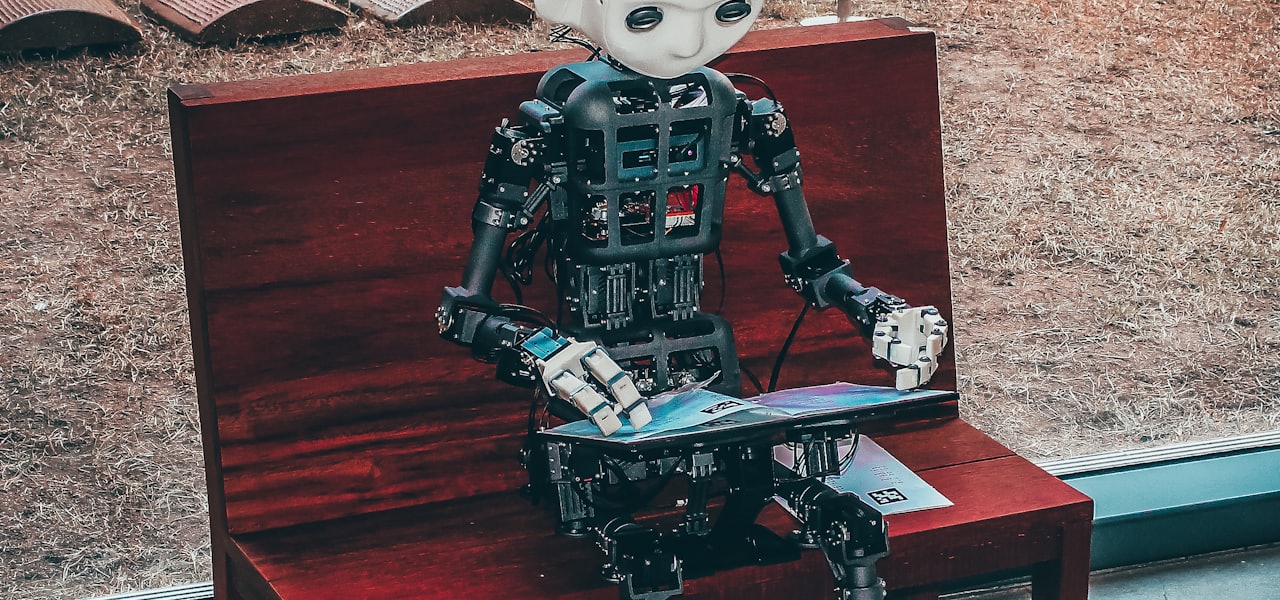
Lawbots are a broad class of customer-facing legal AI applications that are used to automate specific legal tasks, such as document automation and legal research. The terms robot lawyer and lawyer bot are used as synonyms to lawbot. A robot lawyer or a robo-lawyer refers to a legal AI application that can perform tasks that are typically done by paralegals or young associates at law firms. However, there is some debate on the correctness of the term. Some commentators say that legal AI is technically speaking neither a lawyer nor a robot and should not be referred to as such. Other commentators believe that the term can be misleading and note that the robot lawyer of the future will not be one all-encompassing application but a collection of specialized bots for various tasks. Lawbots use various artificial intelligence techniques or other intelligent systems to limit humans' direct ongoing involvement in certain steps of a legal matter. The user interfaces on lawbots vary from smart searches and step-by-step forms to chatbots. Consumer and enterprise-facing lawbot solutions often do not require direct supervision from a legal professional. Depending on the task, some client-facing solutions used at law firms operate under an attorney supervision. == Levels of autonomy == The following levels of autonomy (LoA) are suggested for automated AI legal reasoning: Level 0 (LoA0): No automation for AI legal reasoning Level 1 (LoA1): Simple assistance automation Level 2 (LoA2): Advanced assistance automation Level 3 (LoA3): Semi-autonomous automation Level 4 (LoA4): Domain automation Level 5 (LoA5): Fully-autonomous automation Level 6 (LoA6): Superhuman automation == Examples == Some legal AI solutions are developed and marketed directly to the customers or consumers, whereas other applications are tools for the attorneys at law firms. There are already hundreds of legal AI solutions that operate in multitude of ways varying in sophistication and dependence on scripted algorithms. One notable legal technology chatbot application is DoNotPay. It had started off as an app for contesting parking tickets, but has since expanded to include features that help users with many different types of legal issues, ranging from consumer protection to immigration rights and other social issues. == Impact on the legal industry == In the 2016 report, Deloitte estimated that more than 110,000 law jobs in just the United Kingdom alone could disappear within the next twenty years due to automation. This change could result in the creation of more highly skilled jobs and in the reduction of paralegal and temporary positions. Deloitte's report asserts that "there is significant potential for high-skilled roles that involve repetitive processes to be automated by smart and self-learning algorithms". According to Lawyers to Engage, between 22% of a lawyer’s work and 35% of a legal assistant’s work can be automated in the US. Top law schools like Harvard have already begun to integrate Artificial Intelligence into the curriculum. Legal tech start-up companies have begun developing applications that assist law firms with completing low-risk legal processes. These applications can enable lawyers to focus on more work that requires their specific expertise. The automation of processes like contract reviewing, enforcement of negotiations (smart contracts) and client intake (expert systems) allows law firms to streamline their procedures and improve efficiency. In addition, automation benefits small-to-medium law firms that do not have the resources to utilize junior talent on such routine tasks. The increase of law firms utilizing automated applications could result into legal tech becoming a necessity in the industry. Digital Reason CEO, Tim Estes, stated that those who refuse the opportunity to integrate AI in their workflow are “most at risk.” In 2018, Forbes reported a 713% increase in investments in legal tech. This rapid growth is reflective of law firms beginning to “cede business to… new model legal providers… that meld technological, business and legal expertise.” == Access to law and justice == It has been widely estimated for at least the last generation that all the programs and resources devoted to ensuring access to justice address only 20% of the civil legal needs of low-income people in the United States. Drawing on this experience, in late 2011, the U.S. government-funded Legal Services Corporation decided to convene a summit of leaders to explore how best to use technology in the access-to-justice community. The group adopted a mission for The Summit on the Use of Technology to Expand Access to Justice (Summit) consistent with the magnitude of the challenge: "to explore the potential of technology to move the United States toward providing some form of effective assistance to 100% of persons otherwise unable to afford an attorney for dealing with essential civil legal needs". In April 2017, joined by Microsoft and Pro Bono Net, the Legal Services Corporation (LSC) announced a pilot program to develop online, statewide legal portals to direct individuals with civil legal needs to the most appropriate forms of assistance. == Technological limitations == Current research in subjects such as computational privacy, explainable machine learning, Bayesian deep learning, knowledge-intensive machine learning, and transfer learning reveals that we do not yet have the technology to enable Level 4 to 6 AI lawbots. In 2023, OpenLaw began developing a model called Law Bot, which interacts in a conversational way as an attorney. The dialogue format makes it possible for Law Bot to answer follow-up questions, challenge incorrect premises, and reject inappropriate requests. Currently, they try to ensure it is in full compliance with all laws and regulations while conducting further beta testing before releasing it to the general public.
History of machine translation
Machine translation is a sub-field of computational linguistics that investigates the use of software to translate text or speech from one natural language to another. In the 1950s, machine translation became a reality in research, although references to the subject can be found as early as the 17th century. The Georgetown experiment, which involved successful fully automatic translation of more than sixty Russian sentences into English in 1954, was one of the earliest recorded projects. Researchers of the Georgetown experiment asserted their belief that machine translation would be a solved problem within a few years. In the Soviet Union, similar experiments were performed shortly after. Consequently, the success of the experiment ushered in an era of significant funding for machine translation research in the United States. The achieved progress was much slower than expected; in 1966, the ALPAC report found that ten years of research had not fulfilled the expectations of the Georgetown experiment and resulted in dramatically reduced funding. Interest grew in statistical models for machine translation, which became more common and also less expensive in the 1980s as available computational power increased. Although there exists no autonomous system of "fully automatic high quality translation of unrestricted text," there are many programs now available that are capable of providing useful output within strict constraints. Several of these programs are available online, such as Google Translate and the SYSTRAN system that powers AltaVista's BabelFish (which was replaced by Microsoft Bing translator in May 2012). == The beginning == The origins of machine translation can be traced back to the work of Al-Kindi, a 9th-century Arabic cryptographer who developed techniques for systemic language translation, including cryptanalysis, frequency analysis, and probability and statistics, which are used in modern machine translation. The idea of machine translation later appeared in the 17th century. In 1629, René Descartes proposed a universal language, with equivalent ideas in different tongues sharing one symbol. In the mid-1930s the first patents for "translating machines" were applied for by Georges Artsrouni, for an automatic bilingual dictionary using punched tape. Russian Peter Troyanskii submitted a more detailed proposal that included both the bilingual dictionary and a method for dealing with grammatical roles between languages, based on the grammatical system of Esperanto. This system was separated into three stages: stage one consisted of a native-speaking editor in the source language to organize the words into their logical forms and to exercise the syntactic functions; stage two required the machine to "translate" these forms into the target language; and stage three required a native-speaking editor in the target language to normalize this output. Troyanskii's proposal remained unknown until the late 1950s, by which time computers were well-known and utilized. == The early years == The first set of proposals for computer based machine translation was presented in 1949 by Warren Weaver, a researcher at the Rockefeller Foundation, "Translation memorandum". These proposals were based on information theory, successes in code breaking during the Second World War, and theories about the universal principles underlying natural language. A few years after Weaver submitted his proposals, research began in earnest at many universities in the United States. On 7 January 1954 the Georgetown–IBM experiment was held in New York at the head office of IBM. This was the first public demonstration of a machine translation system. The demonstration was widely reported in the newspapers and garnered public interest. The system itself, however, was no more than a "toy" system. It had only 250 words and translated 49 carefully selected Russian sentences into English – mainly in the field of chemistry. Nevertheless, it encouraged the idea that machine translation was imminent and stimulated the financing of the research, not only in the US but worldwide. Early systems used large bilingual dictionaries and hand-coded rules for fixing the word order in the final output which was eventually considered too restrictive in linguistic developments at the time. For example, generative linguistics and transformational grammar were exploited to improve the quality of translations. During this period operational systems were installed. The United States Air Force used a system produced by IBM and Washington University in St. Louis, while the Atomic Energy Commission and Euratom, in Italy, used a system developed at Georgetown University. While the quality of the output was poor it met many of the customers' needs, particularly in terms of speed. At the end of the 1950s, Yehoshua Bar-Hillel was asked by the US government to look into machine translation, to assess the possibility of fully automatic high-quality translation by machines. Bar-Hillel described the problem of semantic ambiguity or double-meaning, as illustrated in the following sentence: Little John was looking for his toy box. Finally he found it. The box was in the pen. The word pen may have two meanings: the first meaning, something used to write in ink with; the second meaning, a container of some kind. To a human, the meaning is obvious, but Bar-Hillel claimed that without a "universal encyclopedia" a machine would never be able to deal with this problem. At the time, this type of semantic ambiguity could only be solved by writing source texts for machine translation in a controlled language that uses a vocabulary in which each word has exactly one meaning. == The 1960s, the ALPAC report and the seventies == Research in the 1960s in both the Soviet Union and the United States concentrated mainly on the Russian–English language pair. The objects of translation were chiefly scientific and technical documents, such as articles from scientific journals. The rough translations produced were sufficient to get a basic understanding of the articles. If an article discussed a subject deemed to be confidential, it was sent to a human translator for a complete translation; if not, it was discarded. A great blow came to machine-translation research in 1966 with the publication of the ALPAC report. The report was commissioned by the US government and delivered by ALPAC, the Automatic Language Processing Advisory Committee, a group of seven scientists convened by the US government in 1964. The US government was concerned that there was a lack of progress being made despite significant expenditure. The report concluded that machine translation was more expensive, less accurate and slower than human translation, and that despite the expenditures, machine translation was not likely to reach the quality of a human translator in the near future. The report recommended, however, that tools be developed to aid translators – automatic dictionaries, for example – and that some research in computational linguistics should continue to be supported. The publication of the report had a profound impact on research into machine translation in the United States, and to a lesser extent the Soviet Union and United Kingdom. Research, at least in the US, was almost completely abandoned for over a decade. In Canada, France and Germany, however, research continued. In the US the main exceptions were the founders of SYSTRAN (Peter Toma) and Logos (Bernard Scott), who established their companies in 1968 and 1970 respectively and served the US Department of Defense. In 1970, the SYSTRAN system was installed for the United States Air Force, and subsequently by the Commission of the European Communities in 1976. The METEO System, developed at the Université de Montréal, was installed in Canada in 1977 to translate weather forecasts from English to French, and was translating close to 80,000 words per day or 30 million words per year until it was replaced by a competitor's system on 30 September 2001. While research in the 1960s concentrated on limited language pairs and input, demand in the 1970s was for low-cost systems that could translate a range of technical and commercial documents. This demand was spurred by the increase of globalisation and the demand for translation in Canada, Europe, and Japan. == The 1980s and early 1990s == By the 1980s, both the diversity and the number of installed systems for machine translation had increased. A number of systems relying on mainframe technology were in use, such as SYSTRAN, Logos, Ariane-G5, and Metal. As a result of the improved availability of microcomputers, there was a market for lower-end machine translation systems. Many companies took advantage of this in Europe, Japan, and the USA. Systems were also brought onto the market in China, Eastern Europe, Korea, and the Soviet Union. During the 1980s there was a lot of activity in MT in Japan especially. With the fifth-generation co
AS1 (networking)
AS1 (Applicability Statement 1) is a specification about how to transport structured business-to-business data securely and reliably over the Internet. Security is achieved by using digital certificates and encryption. == AS1 technical overview == The AS1 protocol is based on SMTP and S/MIME. It was the first AS protocol developed and uses signing, encryption and MDN conventions. In other words: Files are sent as "attachments" in a specially coded SMIME email message Messages can be signed, but do not have to be Messages can be encrypted, but do not have to be Messages may request an MDN back if all went well, but do not have to request such a message If the original AS1 message requested an MDN... Upon the receipt of the message and its successful decryption or signature validation (as necessary) a "success" MDN will be sent back to the original sender. This MDN is typically signed but not encrypted. Upon the receipt and successful verification of the signature on the MDN, the original sender will "know" that the recipient got their message (this provides the "Non-repudiation" element of AS1) If there are any problems receiving or interpreting the original AS1 message, a "failed" MDN may be sent back. Like any other AS file transfer, AS1 file transfers typically require both sides of the exchange to trade X.509 certificates and specific "trading partner" names before any transfers can take place.
Myrinet
Myrinet, ANSI/VITA 26-1998, is a high-speed local area networking system designed by the company Myricom to be used as an interconnect between multiple machines to form computer clusters. == Description == Myrinet was promoted as having lower protocol overhead than standards such as Ethernet, and therefore better throughput, less interference, and lower latency while using the host CPU. Although it can be used as a traditional networking system, Myrinet is often used directly by programs that "know" about it, thereby bypassing a call into the operating system. Earlier versions of Myrinet used a variety of media and connectors: Generation 2 used copper media with DC-37 (Myrinet-LAN, M2L- controllers and switches) or microribbon (Myrinet-SAN, M2M-) connectors. Generation 3 used copper media with HSSDC (Myrinet-Serial, M3S-) or microribbon (Myrinet-SAN, M3M-) connectors, or fiber with LC-connectors (Myrinet-Fiber, M3F-). The later versions of Myrinet physically consist of two fibre optic cables, upstream and downstream, connected to the host computers with a single connector. Machines are connected via low-overhead routers and switches, as opposed to connecting one machine directly to another. Myrinet includes a number of fault-tolerance features, mostly backed by the switches. These include flow control, error control, and "heartbeat" monitoring on every link. The "fourth-generation" Myrinet, called Myri-10G, supported a 10 Gbit/s data rate and can use 10 Gigabit Ethernet on PHY, the physical layer (cables, connectors, distances, signaling). Myri-10G started shipping at the end of 2005. Myrinet was approved in 1998 by the American National Standards Institute for use on the VMEbus as ANSI/VITA 26-1998. One of the earliest publications on Myrinet is a 1995 IEEE article. === Performance === Myrinet is a lightweight protocol with little overhead that allows it to operate with throughput close to the basic signaling speed of the physical layer. For supercomputing, the low latency of Myrinet is even more important than its throughput performance, since, according to Amdahl's law, a high-performance parallel system tends to be bottlenecked by its slowest sequential process, which in all but the most embarrassingly parallel supercomputer workloads is often the latency of message transmission across the network. === Deployment === According to Myricom, 141 (28.2%) of the June 2005 TOP500 supercomputers used Myrinet technology. In the November 2005 TOP500, the number of supercomputers using Myrinet was down to 101 computers, or 20.2%, in November 2006, 79 (15.8%), and by November 2007, 18 (3.6%), a long way behind gigabit Ethernet at 54% and InfiniBand at 24.2%. In the June 2014 TOP500 list, the number of supercomputers using Myrinet interconnect was 1 (0.2%). In November 2013, the assets of Myricom (including the Myrinet technology) were acquired by CSP Inc. In 2016, it was reported that Google had also offered to buy the company.
Protecting Kids From Social Media Act
Protecting Kids on Social Media Act or HB 1891 is an American law that was introduced by William Lamberth of Sumner County, Tennessee and was signed into law by Tennessee's governor on May 2, 2024. The bill requires social media websites such as X, YouTube, TikTok, Facebook and others to verify the age of users and if those users are under 18, they must have parental consent. == Progress == The law passed the Tennessee State Legislature with little opposition: the bill had only two no votes in the House from Aftyn Behn and Vincent B. Dixie, and it had zero no votes in the Senate. == Bill summary == Every social media company must verify the age of new users after the law takes effect, and if the user had created an account before the law took effect, they must verify the age of the person attempting to access the account within 14 days. If the new user or the user who originally owned an account is under 18 years of age, they must get parental consent and the third party or social media company must not retain the data from the age verification process or obtaining parental consent. Parents who are account holders of those under 18 can view the privacy settings, set daily time restrictions, and implement breaks during which the minor cannot access the account. The law is enforced by the Attorney General of Tennessee and went into effect on January 1, 2025. == Lawsuit == On October 3, 2024, the trade association NetChoice filed a lawsuit against Tennessee Attorney General Jonathan Skrmetti in the Middle District Court of Tennessee, claiming that the law violates the First Amendment. The Judge for the case is William L. Campbell Jr. An initial case management conference was originally scheduled for December 4, 2024, however it was delayed because of the Supreme Court case United States v. Skrmetti, recommending that the conference be delayed after January 20, 2025. On February 14, 2025, Judge Eli Richardson denied NetChoice's motion for a temporary restraining order because it would disrupt the status quo of the case.
Desktop Window Manager
Desktop Window Manager (DWM, previously Desktop Compositing Engine or DCE in builds of pre-reset Windows Longhorn) is the compositing window manager in Microsoft Windows since Windows Vista that enables the use of hardware acceleration to render the graphical user interface of Windows. It was originally created to enable portions of the new "Windows Aero" user experience, which allowed for effects such as transparency, 3D window switching and more. It is also included with Windows Server 2008, but requires the "Desktop Experience" feature and compatible graphics drivers to be installed. == Architecture == The Desktop Window Manager is a compositing window manager, meaning that each program has a buffer that it writes data to; DWM then composites each program's buffer into a final image. By comparison, the stacking window manager in Windows XP and earlier (and also Windows Vista and Windows 7 with Windows Aero disabled) comprises a single display buffer to which all programs write. DWM works in different ways depending on the operating system (Windows 7 or Windows Vista) and on the version of the graphics drivers it uses (WDDM 1.0 or 1.1). Under Windows 7 and with WDDM 1.1 drivers, DWM only writes the program's buffer to the video RAM, even if it is a graphics device interface (GDI) program. This is because Windows 7 supports (limited) hardware acceleration for GDI and in doing so does not need to keep a copy of the buffer in system RAM so that the CPU can write to it. Because the compositor has access to the graphics of all applications, it easily allows visual effects that string together visuals from multiple applications, such as transparency. DWM uses DirectX to perform the function of compositing and rendering in the GPU, freeing the CPU of the task of managing the rendering from the off-screen buffers to the display. However, it does not affect applications painting to the off-screen buffers – depending on the technologies used for that, this might still be CPU-bound. DWM-agnostic rendering techniques like GDI are redirected to the buffers by rendering the user interface (UI) as bitmaps. DWM-aware rendering technologies like WPF directly make the internal data structures available in a DWM-compatible format. The window contents in the buffers are then converted to DirectX textures. The desktop itself is a full-screen Direct3D surface, with windows being represented as a mesh consisting of two adjacent (and mutually inverted) triangles, which are transformed to represent a 2D rectangle. The texture, representing the UI chrome, is then mapped onto these rectangles. Window transitions are implemented as transformations of the meshes, using shader programs. With Windows Vista, the transitions are limited to the set of built-in shaders that implement the transformations. Greg Schechter, a developer at Microsoft has suggested that this might be opened up for developers and users to plug in their own effects in a future release. DWM only maps the primary desktop object as a 3D surface; other desktop objects, including virtual desktops as well as the secure desktop used by User Account Control are not. Because all applications render to an off-screen buffer, they can be read off the buffer embedded in other applications as well. Since the off-screen buffer is constantly updated by the application, the embedded rendering will be a dynamic representation of the application window and not a static rendering. This is how the live thumbnail previews and Windows Flip work in Windows Vista and Windows 7. DWM exposes a public API that allows applications to access these thumbnail representations. The size of the thumbnail is not fixed; applications can request the thumbnails at any size - smaller than the original window, at the same size or even larger - and DWM will scale them properly before returning. Aero Flip does not use the public thumbnail APIs as they do not allow for directly accessing the Direct3D textures. Instead, Aero Flip is implemented directly in the DWM engine. The Desktop Window Manager uses Media Integration Layer (MIL), the unmanaged compositor which it shares with Windows Presentation Foundation, to represent the windows as composition nodes in a composition tree. The composition tree represents the desktop and all the windows hosted in it, which are then rendered by MIL from the back of the scene to the front. Since all the windows contribute to the final image, the color of a resultant pixel can be decided by more than one window. This is used to implement effects such as per-pixel transparency. DWM allows custom shaders to be invoked to control how pixels from multiple applications are used to create the displayed pixel. The DWM includes built-in Pixel Shader 2.0 programs which compute the color of a pixel in a window by averaging the color of the pixel as determined by the window behind it and its neighboring pixels. These shaders are used by DWM to achieve the blur effect in the window borders of windows managed by DWM, and optionally for the areas where it is requested by the application. Since MIL provides a retained mode graphics system by caching the composition trees, the job of repainting and refreshing the screen when windows are moved is handled by DWM and MIL, freeing the application of the responsibility. The background data is already in the composition tree and the off-screen buffers and is directly used to render the background. In pre-Vista Windows OSs, background applications had to be requested to re-render themselves by sending them the WM_PAINT message. DWM uses double-buffered graphics to prevent flickering and tearing when moving windows. The compositing engine uses optimizations such as culling to improve performance, as well as not redrawing areas that have not changed. Because the compositor is multi-monitor aware, DWM natively supports this too. During full-screen applications, such as games, DWM does not perform window compositing and therefore performance will not appreciably decrease. On Windows 8 and Windows Server 2012, DWM is used at all times and cannot be disabled, due to the new "start screen experience" implemented. Since the DWM process is usually required to run at all times on Windows 8, users experiencing an issue with the process are seeing memory usage decrease after a system reboot. This is often the first step in a long list of troubleshooting tasks that can help. It is possible to prevent DWM from restarting temporarily in Windows 8, which causes the desktop to turn black, the taskbar grey, and break the start screen/modern apps, but desktop apps will continue to function and appear just like Windows 7 and Vista's Basic theme, based on the single-buffer renderer used by XP. They also use Windows 8's centered title bar, visible within Windows PreInstallation Environment. Starting up Windows without DWM will not work because the default lock screen requires DWM unlike the fallback lockscreen that appears as a command line interface program when Windows.UI.Logon.dll isn't present on Windows versions such as 1507 and later, so it can only be done on the fly, and does not have any practical purposes. Starting with Windows 10, disabling DWM in such a way will cause the entire compositing engine to break, even traditional desktop apps, due to Universal App implementations in the taskbar and new start menu. Windows can still be partially usable without the presence of DWM but requires Sihost.exe to not be present due to it relying on DWM. Most of the applications in Windows 11 require DWM to render UI elements and transparency, Windows 11's new task manager requires dwm to render menus unlike the fallback -d version. Unlike its predecessors, Windows 8 supports basic display adapters through Windows Advanced Rasterization Platform (WARP), which uses software rendering and the CPU to render the interface rather than the graphics card. This allows DWM to function without compatible drivers, but not at the same level of performance as with a normal graphics card. DWM on Windows 8 also adds support for stereoscopic 3D. == Redirection == For rendering techniques that are not DWM-aware, output must be redirected to the DWM buffers. With Windows, either GDI or DirectX can be used for rendering. To make these two work with DWM, redirection techniques for both are provided. With GDI, which is the most used UI rendering technique in Microsoft Windows, each application window is notified when it or a part of it comes in view and it is the job of the application to render itself. Without DWM, the rendering rasterizes the UI in a buffer in video memory, from where it is rendered to the screen. Under DWM, GDI calls are redirected to use the Canonical Display Driver (cdd.dll), a software renderer. A buffer equal to the size of the window is allocated in system memory and CDD.DLL outputs to this buffer rather than the video memory. Another buffer is allocated in the video memory to represent t
Tableau de Concordance
The Tableau de Concordance was the main French diplomatic code used during World War I; the term also refers to any message sent using the code. It was a superenciphered four-digit code that was changed three times between 1 August 1914 and 15 January 1915. The Tableau de Concordance is considered superenciphered because there is more than one step required to use it. First, each word in a message is replaced by four digits via a codebook. These four digits are divided into three groups (one digit, two digits, one digit) so that when the whole message has been translated into code, the four-digit sets can be put together so it looks like the entire message is made up of two-digit pairs. This is called a "Straddle Gimmick." Then, in turn, each of these two digit pairs (and the single digits at the beginning and end) are replaced by two letters. The letters are then combined with no spaces for the final ciphertext. The manual for the Tableau de Concordance included the instruction that if there was not adequate time for completely enciphering the message, it should simply be sent in clear, because a partially enciphered message would have provided insight into the inner workings of the code.